A teaching strategy for encouraging participative curiosity in the classroom
Dr. Abby Jorgensen
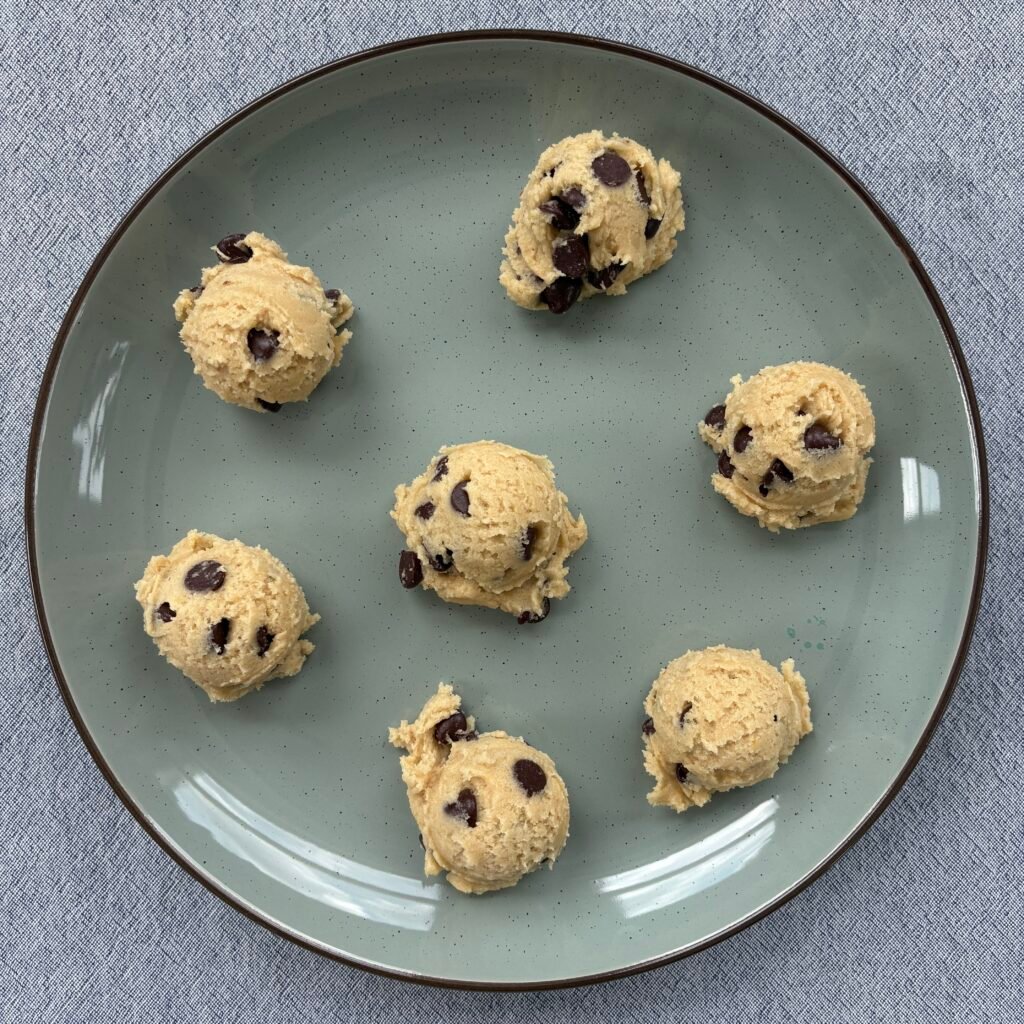
Cookie dough is delicious.
Even though it is technically considered unfinished, it brings sweetness, the dual nature of creamy and crunchy, the coolness of summer, and the deepness of brown sugar. It brings smooth yet sweetly gritty explosions of flavor to everyone who has the pleasure of enjoying it.
Things need not be completed to be important. Beautiful. Fun. Worth sharing with others. Rewarding.
The same is true of our understanding of ideas. When we prioritize curiosity, we need not have the right answer or the end result every time we speak. The more we grapple, wrestle, and wonder, the more we have toned and curated our curiosity. And the more we do so in groups, the more we strengthen our mutual curiosity.

Curiosity is the second most important value in my classroom. Most important is the respect for the dignity of every human being. That value, as primary, provides guidance for our curiosity, orienting it toward the good of the other and – because of that first orientation – toward the good of ourselves as well. Curiosity without this value of respect can look like horrifically unethical experiments, knowledge for power’s sake, and the evil of pride. It is the dignity of the human being that provides guidance for our curiosity, shepherding it toward the good of the other and therefore the good of ourselves.
Curiosity, in my words, is the eager desire to better grasp at the reality of a situation – whether our own situation or that of someone else.
In my classroom, students are not rewarded solely for getting the answer to a question correct or for asking the most insightful question. Rather, students are rewarded according to their curiosity. Demonstrating our eager desires to better grasp reality can involve making ourselves vulnerable, by asking for clarification on a point that confuses us, or by taking a guess that may be wrong (even in front of others)!
This is cookie dough. These unfinished, not-fully-thought-out ideas have not quite finished baking. And yet we still see immense beauty, importance, and worthwhileness coming forth from our cookie dough moments. Which is why, in my classroom, such ideas, thoughts, and questions are rewarded. Curiosity is rewarded.
Suppose you have a question that you might consider to be a “dumb” question. Or, you need someone to re-explain something it feels like we have been over a hundred times. Or, you want to guess at an answer or an explanation or an example, but you also don’t feel confident that you’ve got everything quite right. In these kinds of cases, you can mark this in my classroom by calling it a “cookie dough” thought.
For example, “This is a cookie dough thought. Can we apply the same principle to another case, or is it only relevant to this one case?” or, “This is a cookie dough concept for me. Can you go back over the definition please?” or, “Here’s my cookie dough answer. I think it’s boundaries.”
This framing invites us all into your curiosity, giving us a way to grapple together toward reality and, as a team, exercise our sociological imaginations in new ways.
Pursue participatory curiosity. Engage in cookie dough.
For Instructors:
If you’re interested in using the cookie dough policy in your course, my coauthor Lily Becker and I have prepared material for you, including an overview of the cookie dough policy, sample syllabus language, sample syllabus quiz questions, an example of an introduction in lecture form, and a sample participation self-evaluation.
If you have questions, please email me, the corresponding author of this material, at abigail.jorgensen@slu.edu.
Citing this Resource
Jorgensen, Abigail, and Lily Becker. 2026. “Cookie Dough: A Teaching Strategy for Fostering Curiosity.” cookiedoughpolicy.com. Accessed: <insert date>.
Acknowledgements
We are grateful to Dr. Shiloh Deitz and Dr. Elaina Johns-Wolfe for their thoughtful feedback on this resource.
Student testimonials:
“As a student, I’ve learned that professors like when students participate, when we ask questions, engage in the materials, or even just acknowledge the lecturer by smiling and nodding. But as a person outside of the classroom, I’m always worried about how people perceive me: as dumb, interesting, cool? My first class with the cookie dough policy felt like that weight was lifted: if I said “this is a cookie dough thought” before I said something, everyone in the room was reminded that we are all students, and each student learns differently. And this student needed clarification. The cookie dough policy has helped me come to terms with not being all-knowing, and letting others know that fact, as well.
The cookie dough policy has also kept my ego in check. I might be thinking, “wow, someone else just asked that exact question 2 minutes ago,” but then I remember cookie dough, dramatic like a light in the darkness. The cookie dough metaphor and policy has helped me both be more curious and courteous, both in classrooms with the cookie dough policy and outside of those spaces.”
“This may sound stupid but something about “cookie dough” ideas just makes me like emotional and it feels like it’s healing my inner child in a way. I’ve had teachers or professors make me feel stupid or my classmates feel stupid for asking a certain question, or not fully understanding a concept. You are so clearly a safe place to share all of our ideas and questions, and I am so thankful for that. I will not only remember concepts from this class, but I will remember how I felt and how I was treated every day I came to class.”
“This was the one class when I spoke up. We had a shorthand for “Don’t judge me,” and the professor and the students used it, and that made me feel way less worried that getting judged. So I spoke, when I normally don’t.”